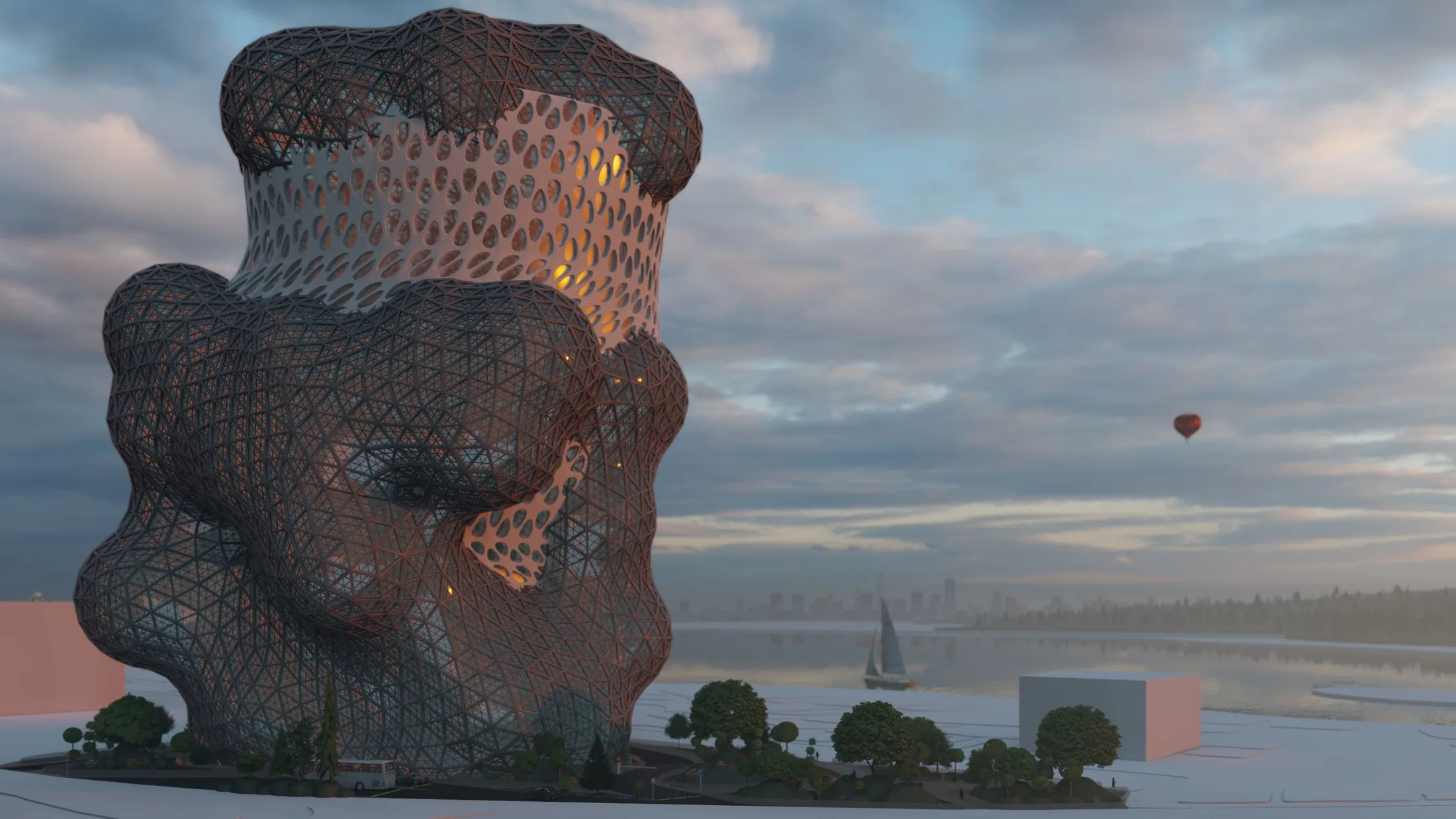
The Simulation, Live
Before the drawings: this is the agent-based system that generated the building, rebuilt to run in your browser. Set the box envelope, place interest points along its edges, then let the flock loose. The six behavioural rules are the same ones used in the original Grasshopper definition, and switching the mesh on builds the form from the agent trajectories exactly as the structural shell was.
Overview
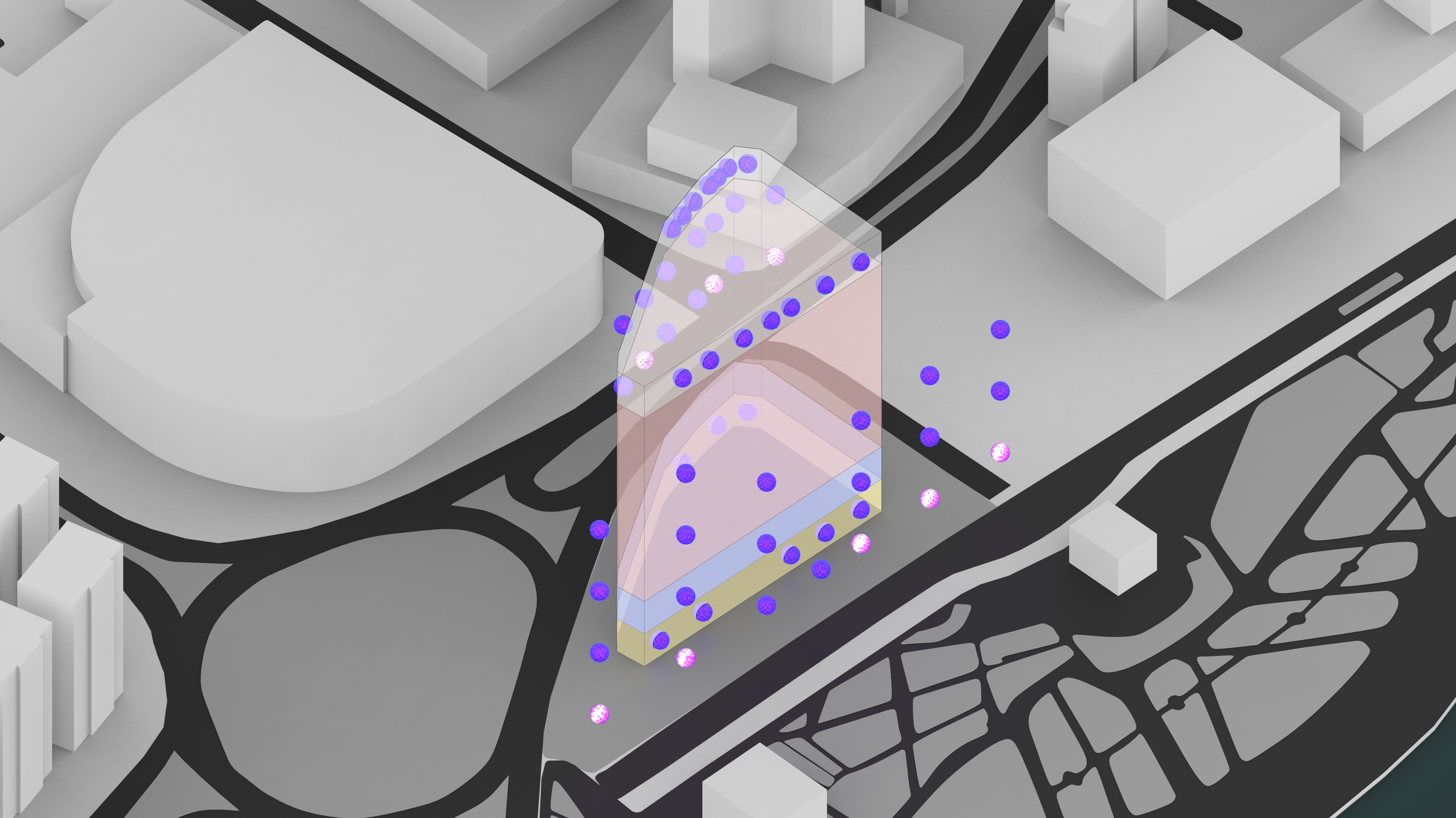
Para Hotel is my undergraduate thesis project located in Tehran, designed using Agent-Based Modeling to simulate the behavioral logic of individual agents within a defined rule set. Rather than imposing geometry from the outside, the project uses flocking algorithms to decentralize the design process and allow spatial organization to emerge naturally from computational interactions. Site and environmental data including sunlight exposure, access points, and view corridors were translated into attraction and repulsion points that guided agent movement, producing the hotel volumetric configuration and circulation paths directly from environmental logic.
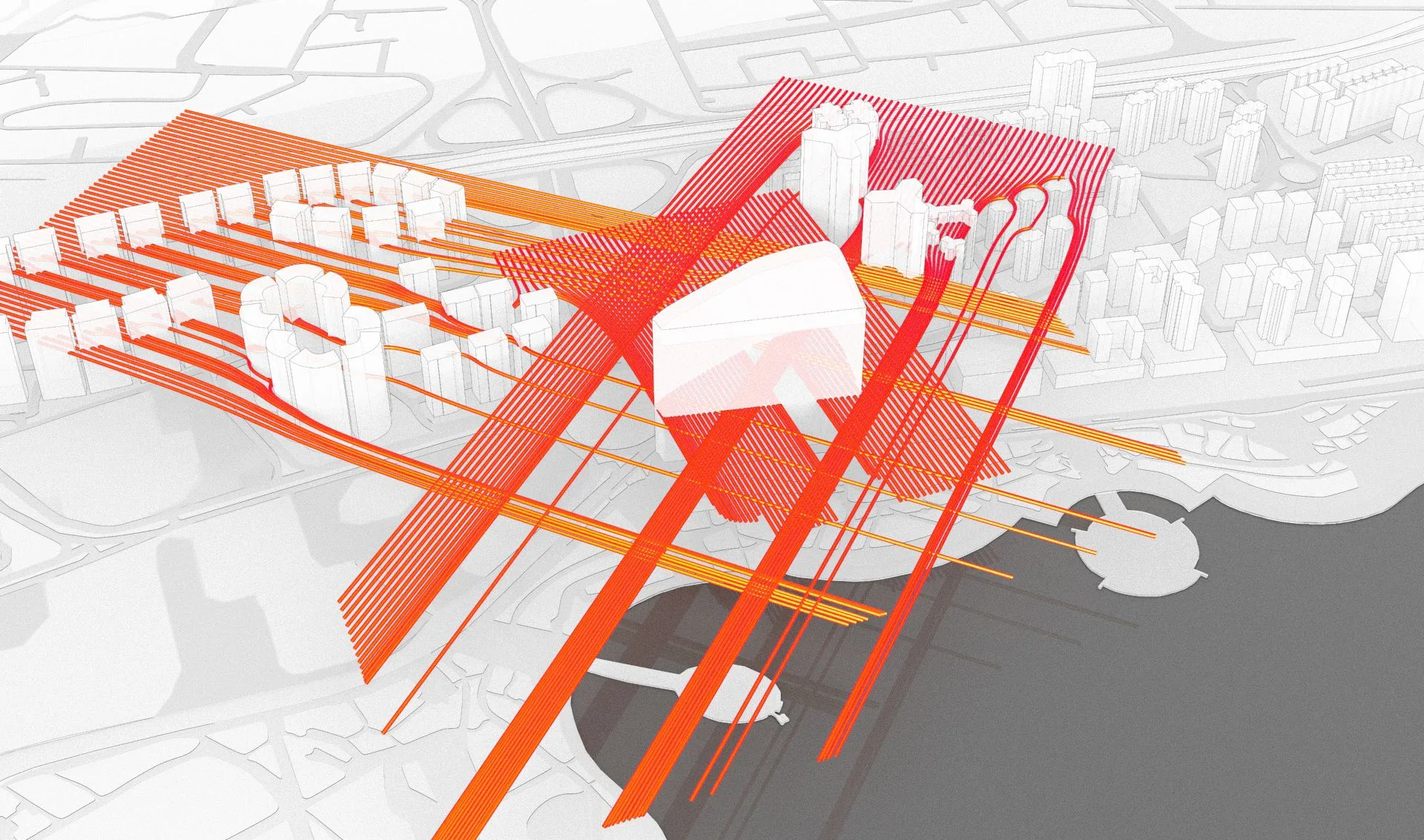
Analysis Layers and Interest Points
The design process began with reading the site through multiple analytical layers: access points, sunlight exposure, wind direction, and view corridors. These were each translated into force fields within the agent system. Attraction points pulled agents toward desirable zones while repulsion points pushed them away from constraints, collectively producing the spatial pressure map that seeded the flocking simulation.
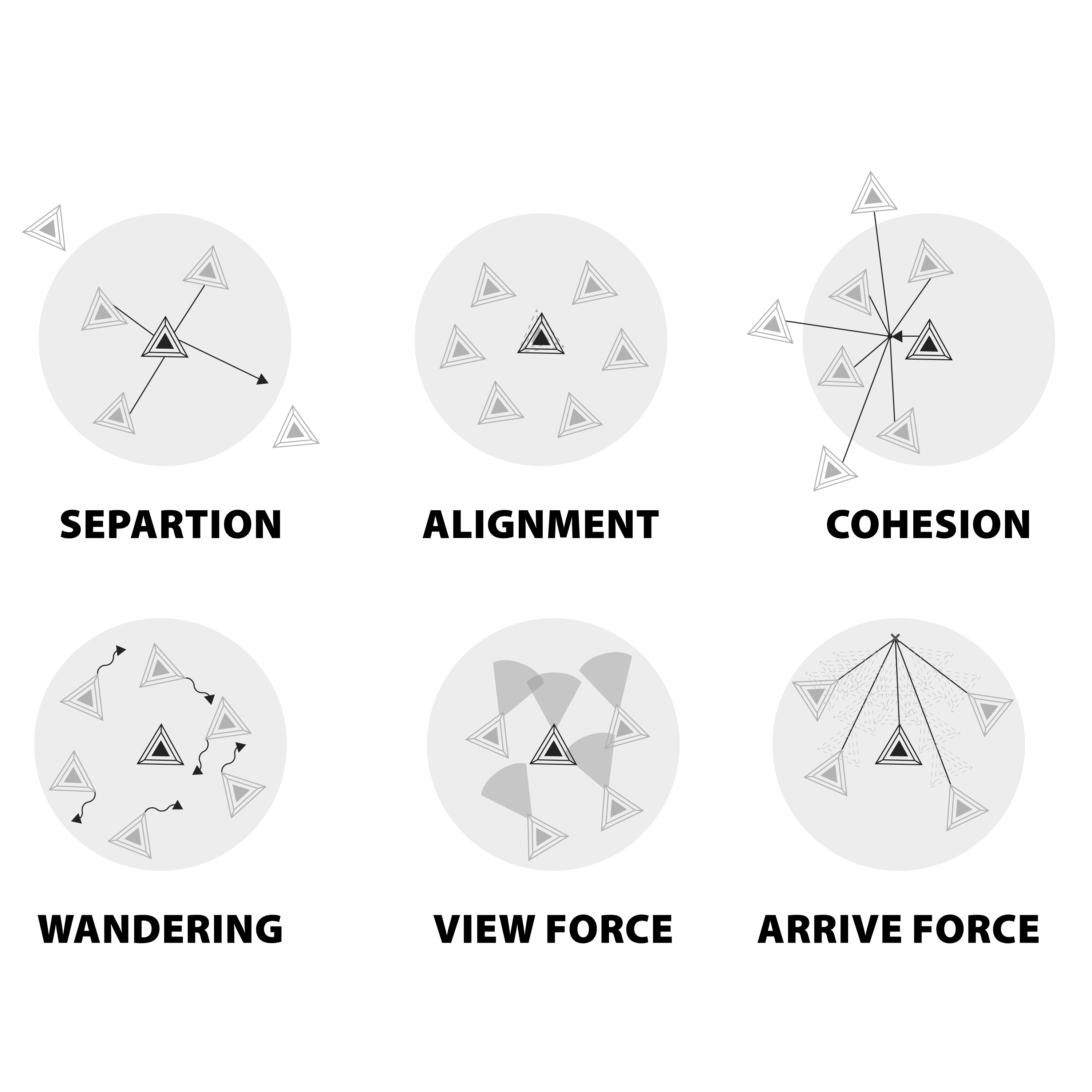
Behavioral Rules and Simulation
Each agent responded to six behavioral rules: separation, alignment, cohesion, wandering, view force, and arrive force. The resulting emergent spatial clusters became programmatic zones. Wind analysis and iterative form-finding sweeps refined the volumetric output, with the structural mesh generated directly from agent trajectories.
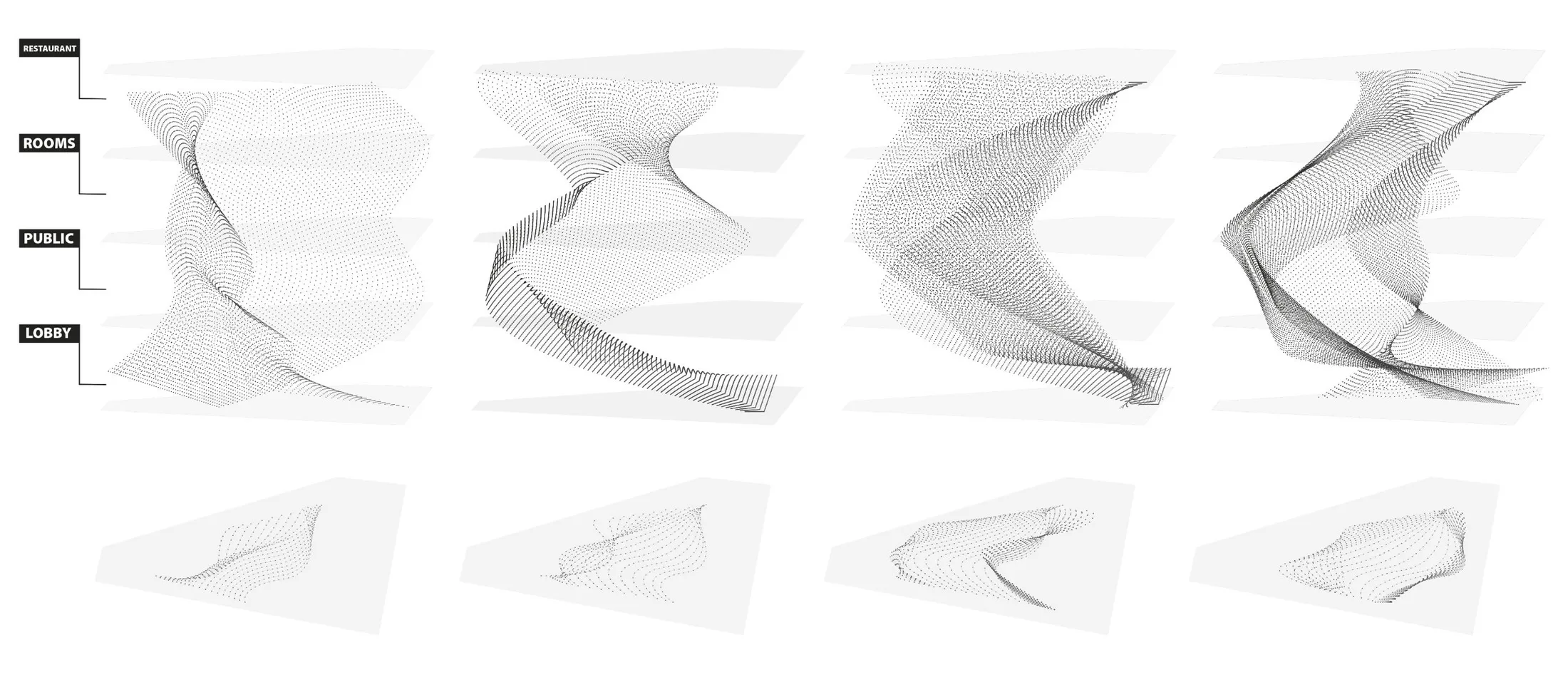
Form evolution: parameter variation sweeps showing how the building volume shifts with agent rule weights
Agent flocking motion: real-time simulation of the behavioral system that generated the building form
Program and Levels
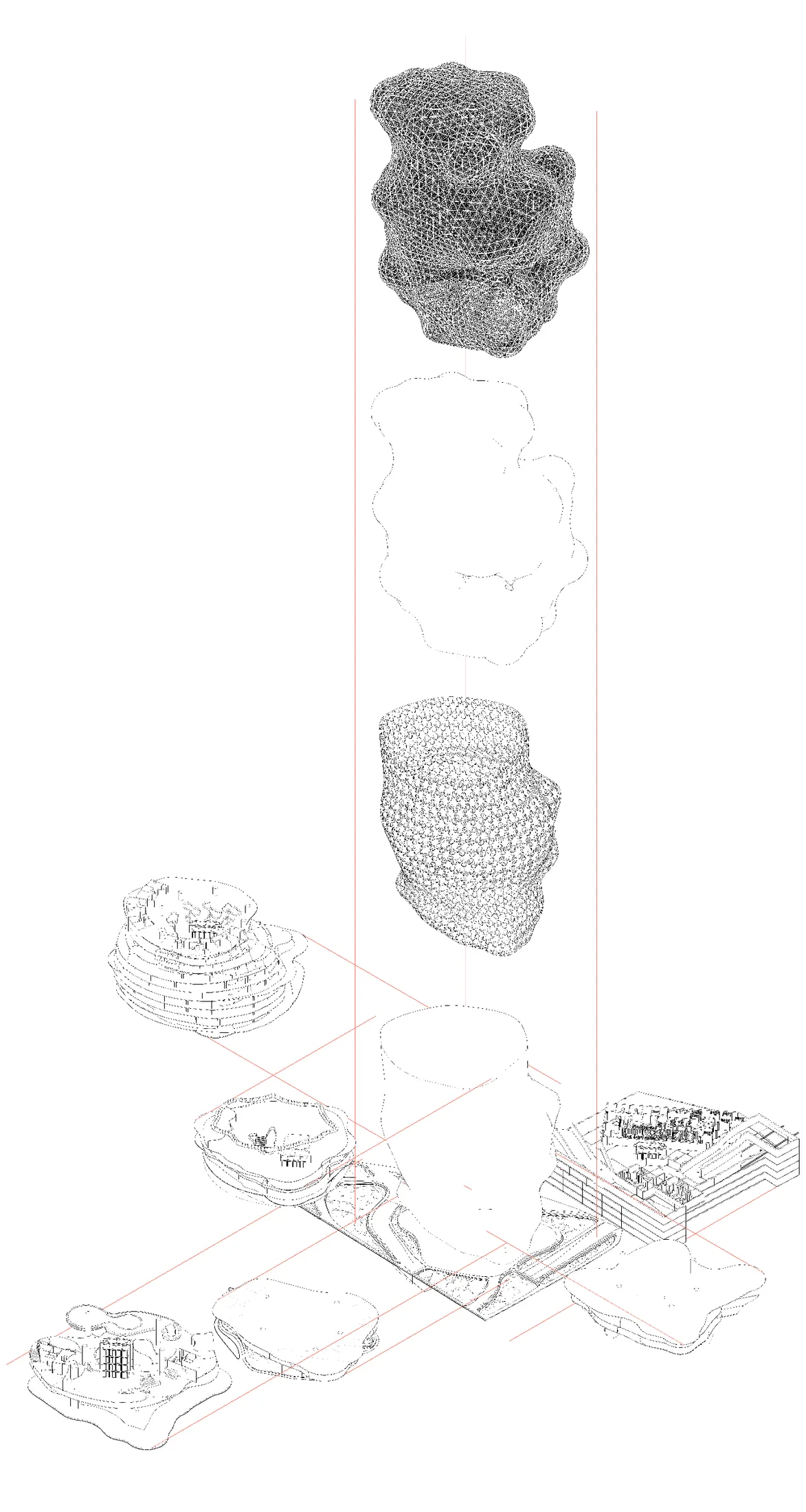
The hotel program spans multiple floors arranged directly from the agent clustering logic. Moving through the exploded diagram: the outer mesh shell wraps the entire volume. Inside, the program descends from the room ring at the upper levels through entertainment, services, restaurants, health club, gardens, multipurpose halls, ballroom, lobby, and basement. Each zone occupies the spatial region where agents with similar behavioral weights converged.
ROOM TYPES
FLOOR PLANS
SECTIONS